


Why collect oil and fats and prevent them from being poured into the waste?
- you protect the environment and sources of drinking water
- save your waste pipes from being clogged with fat deposits
- eliminate the clogging of sewers and the occurrence of rodents
- UCO poured into the sewage system can also seriously disrupt biological treatment in wastewater treatment plants
- oil spilled on the soil damages the soil flora and reduces its permeability
- also 1 drop of used kitchen. oil can pollute several 1,000 l of water
- You save the production of CO2 emissions by recycling the donated used kitchen. oil, biofuel is produced - biodiesel ("green diesel") without the need to produce new raw materials for this purpose
- the presence of UCO in BRKO (biodegradable kitchen waste) is a considerable risk/complicating factor in composting BRKO.
How to pour oils and fats?
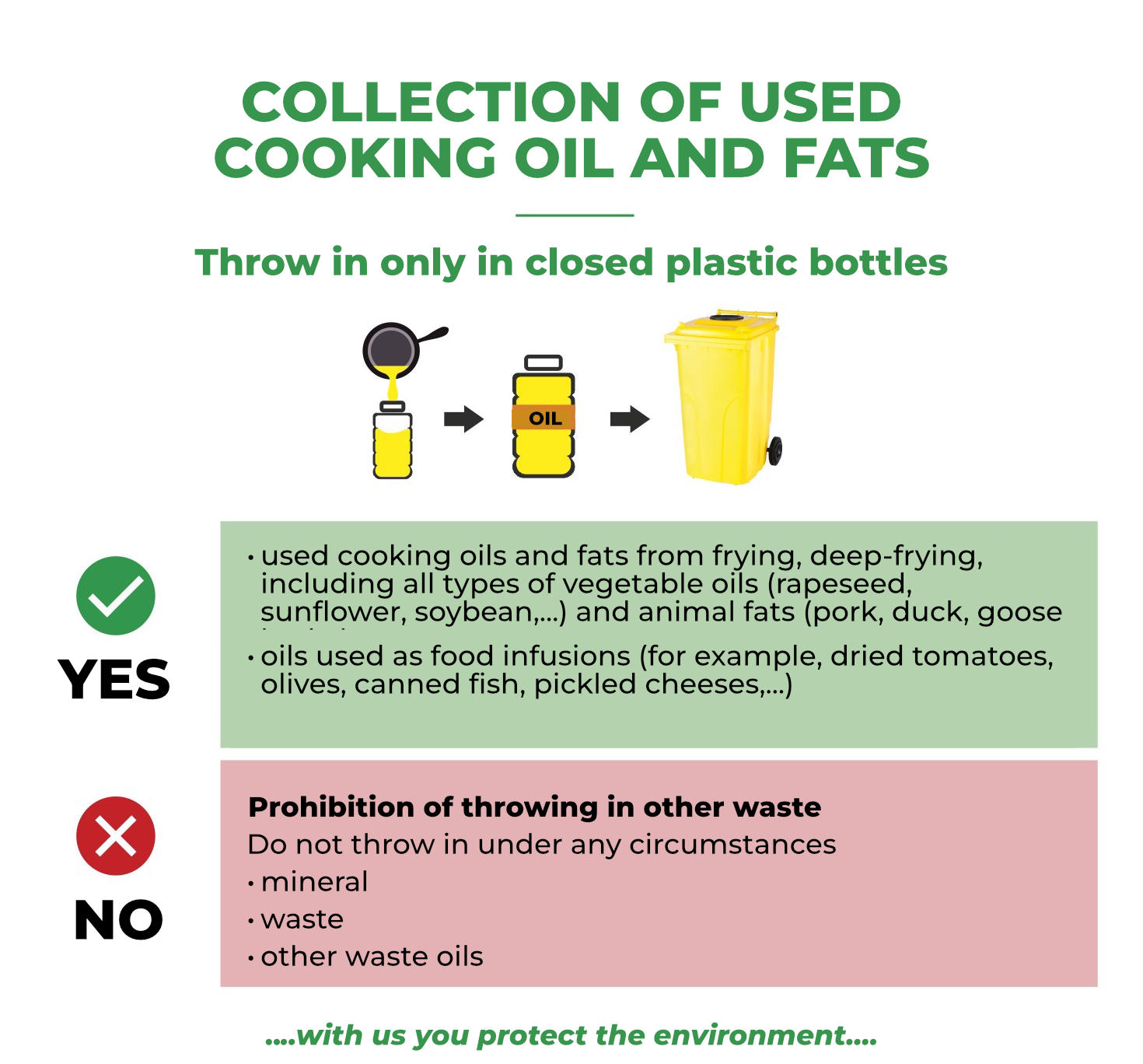
- after use in the kitchen, the oil must be allowed to cool and then strained through a sieve, poured into a closable (preferably transparent) plastic bottle and taken to the collection point
- the oil should not contain coarse impurities and pieces of food
Which reward will you choose?
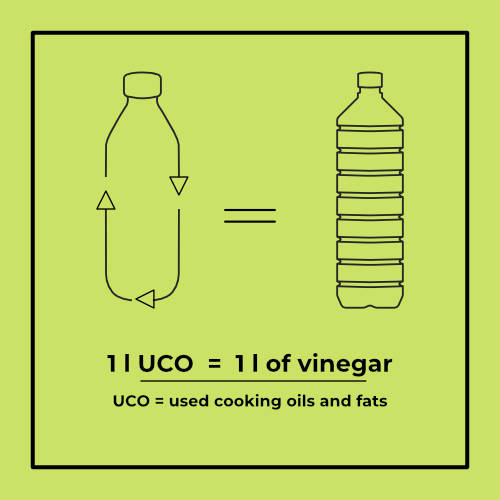
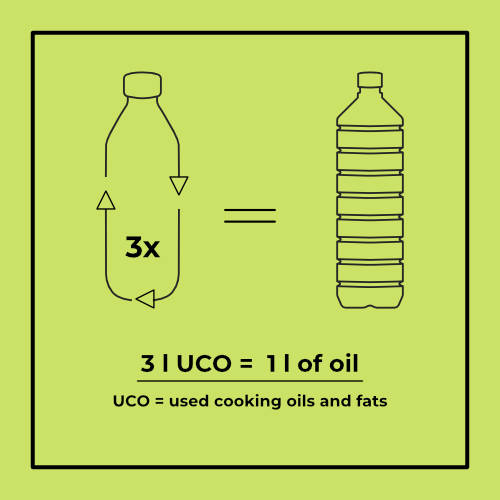
As compensation for handed over used cooking oils and fats, the handover has two options to choose from – Fermented vinegar (for every liter of used oil and fats) or new oil (for 3 liters of used oil and fats) from our suppliers. There is also a 3rd option for companies - to collect used oil without the right to a reward, and we can invoice you for the collected amount. For this chosen cooperation, contact us by email.

Where to submit oils and fats?
If you decide to cooperate with us in collecting, we provide the following options:


Gallery


The partners of the Prilej olej project is the Association for the Production and Use of Biofuels

Biofuels reduce greenhouse gas emissions and other pollutants by up to 60 to 90 % compared to fossil fuels. They thus contribute to the decarbonization of transport and the fight against climate change. The carbon released when biofuels are burned comes from plants that absorbed it from the atmosphere during cultivation, creating a closed cycle between the atmosphere and the biosphere. In contrast, burning fossil fuels increases the total concentration of CO2 in the atmosphere due to the release of fossil carbon that has been locked up in underground deposits for millions of years.
ZVVB brings together experts and supports research related to climate protection, renewable energy sources, and socially beneficial changes. Our strength lies in critical analysis and empirical data. Our goal is a cleaner environment and sustainable transport.
The Energy 21 Association is an association of legal entities, which was founded in 2015 with the aim of supporting the development of science, research and education in the field of renewable energy sources and the efficient use of energy sources, particularly biofuels.
The main areas of activity of the association include:
- research and development focused on renewable energy sources and efficient use of energy sources, especially biofuels,
- consulting and publishing activities in the field of biofuels,
- educational, pedagogical and lecturing activities related to the biofuels,
- support of projects aimed at processing and recovery of waste raw materials.
